
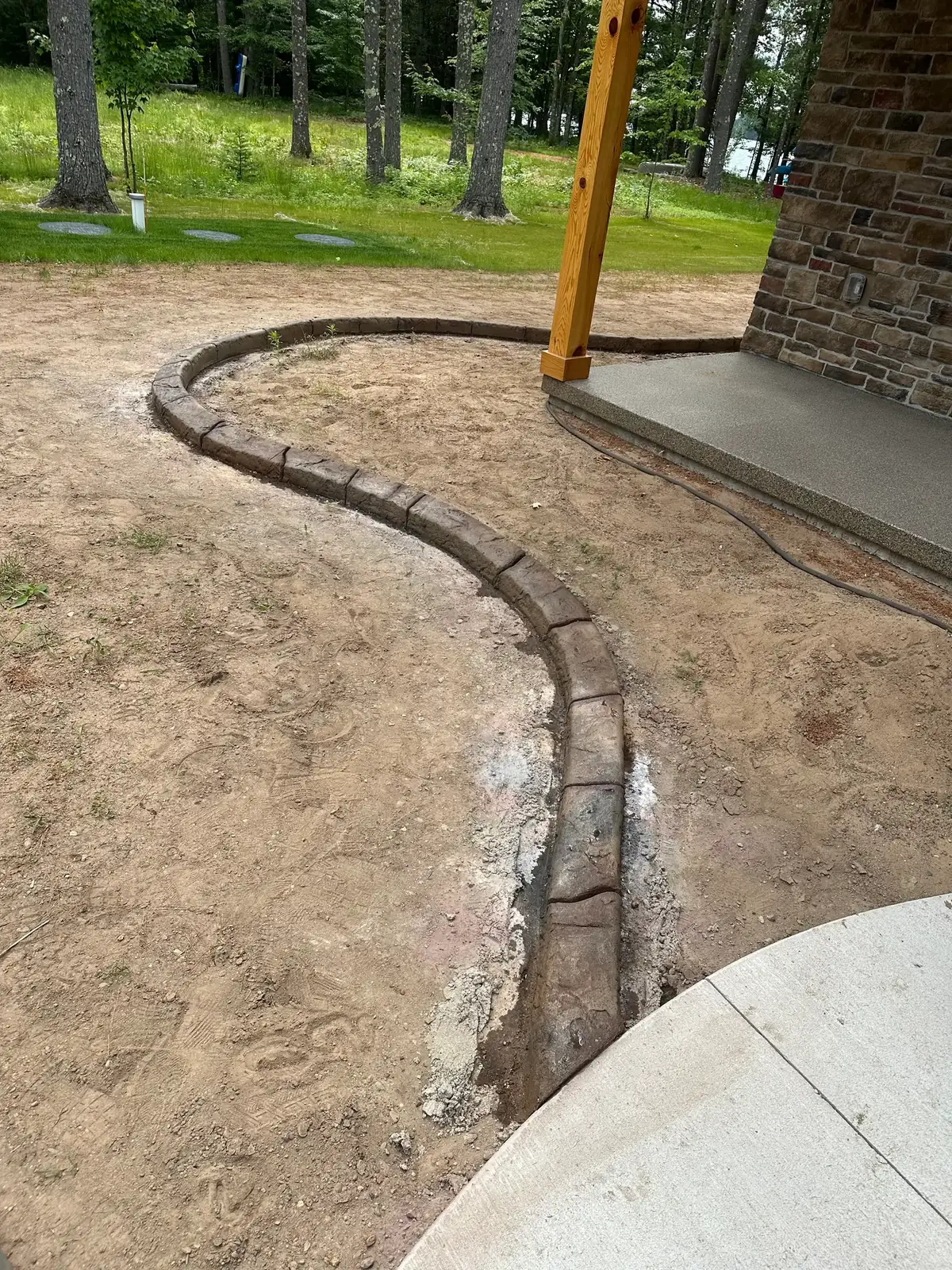
If you are planning both a new lawn and concrete landscape curbing, the short answer is this: for a new lawn, curbing generally goes in after the ground is prepared and before sod is laid, unless your installer tells you otherwise for your specific site. Existing lawns with established turf can also receive curbing without starting over. The real planning work is coordinating site readiness, delivery timing, and watering so neither the concrete nor the new lawn is compromised.
New Lawn or Existing Turf: Two Different Starting Points
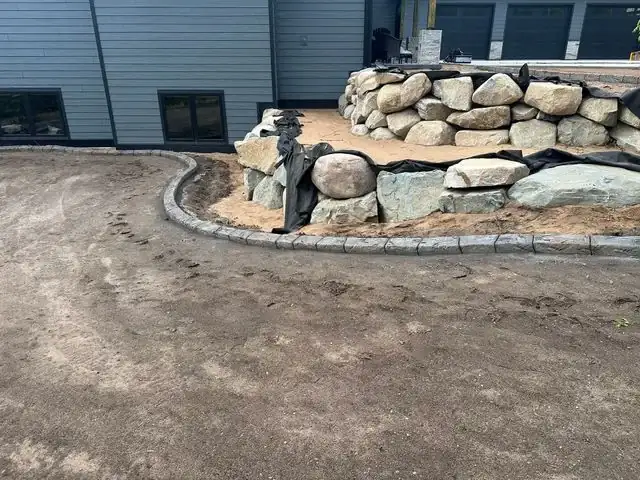
A bare-ground new lawn and a retrofit into an already-established yard are not the same project, and they do not call for the same sequence. On a continuous concrete landscape curbing installation, the layout is typically sprayed along the bed line before any cutting begins, and the channel is prepared ahead of the pour. That means existing grass along a planned bed line does not automatically rule out a curbing project. It does mean the layout should be approved and the channel prepared before turf in that specific area is disturbed.
For a brand-new lawn being built from scratch, the general guidance is to have topsoil placed and leveled before curbing goes in, and for existing landscapes to have any intended grade changes finished first. A permanent concrete border is not the piece that should be installed before the surrounding ground level is settled. Whichever situation describes your property, confirm the intended sequence with your installer before locking in a sod delivery date.
Coordinating Sod Delivery With a Freshly Poured Curb
Fresh sod is perishable. It should be laid quickly, ideally within a day of delivery, and then kept consistently moist while it establishes. Freshly poured concrete curbing needs the opposite kind of attention during its first days: it needs to be left alone to develop strength, with equipment, shovels, wheelbarrows, and other landscape work kept clear of it. These two timelines can work against each other if they are not planned together.
- Confirm when the curb area can safely handle adjacent foot traffic and light equipment before sod crews are scheduled nearby.
- Settle when sprinklers or irrigation watering can resume near the new curbing so new sod does not sit unwatered while concrete cures.
- Plan access routes for the sod crew that do not cross freshly placed curbing.
- Decide in advance who communicates if either the curbing or the sod delivery needs to shift by a day or two.
On most residential projects, the curbing itself is installed in a single day, with a follow-up poly-sealer visit roughly five to seven days later. Neither of those milestones by itself means the area is automatically clear for sod work or for running sprinklers again. The follow-up packet that comes with the two-year workmanship warranty includes maintenance instructions you can reference and share with your sod or lawn crew as you schedule the handoff between the two projects.
Wisconsin Timing and Weather Considerations
Timing a project in Central and Northern Wisconsin adds another layer to the sequencing decision. UW-Madison Extension points to late August into early September as a strong window for establishing lawns by seeding or sodding, though it is an ideal window rather than the only time turf can be installed. Extension guidance also cautions against starting lawn work too early in spring, since soil needs time to thaw and dry before it is workable, regardless of what the calendar says.
Concrete has its own weather sensitivity. Low temperatures slow the curing process, and concrete that freezes while it is still fresh can permanently lose strength, according to the American Concrete Institute. A cooler-weather curbing installation may need different protection and timing than one poured in the middle of summer, which is one more reason to confirm your specific schedule with your installer rather than assuming a single sequence applies to every property and every season.
Choosing a Finish While You Plan
While you are sorting out sequencing, it is also a good time to decide on the look of the curbing itself. Elite Landscape Curbing uses Harpten equipment to form smooth, continuous curves, along with integral color options and stamped designs that mimic stone or brick. If you want to compare finish options in more detail, the decorative stamped and colored borders page covers the available styles. If budget planning is part of your decision, the factors that affect a curbing estimate are outlined on the Central Wisconsin curbing cost guide, which is worth reviewing alongside your sod budget before scope is finalized.
Get a Free Quote From Elite Landscape Curbing
If you are planning concrete landscape curbing alongside a new lawn in Merrill, Wausau, Stevens Point, or elsewhere across Central and Northern Wisconsin, Elite Landscape Curbing can walk through the sequencing for your specific property and provide a free quote backed by a two-year workmanship warranty and a 100% satisfaction guarantee. Call (715) 204-4727 to talk through timing with your sod or lawn plans before you schedule either one.