5 Concrete Border Style Ideas for Garden Beds
A concrete border for garden beds creates a permanent edge that stops grass roots, holds mulch in place, and eliminates seasonal replacement. Stamped concrete borders last 15 to 20 years in Wisconsin's freeze-thaw climate while plastic edging typically cracks within three seasons. The right pattern complements the garden without pulling attention from the plantings. This decision is often based on the home's architecture, bed layout, and how much visual texture the homeowner wants along the edge.
Elite Landscape Curbing installs decorative concrete borders across central and northern Wisconsin, with 23 stamp patterns and over 80 color combinations to match any home and landscape style. The five patterns below—flagstone, cobblestone, random rock, wood grain, and castle rock—cover the range from formal to rustic and are the most popular choices for Wisconsin garden beds.
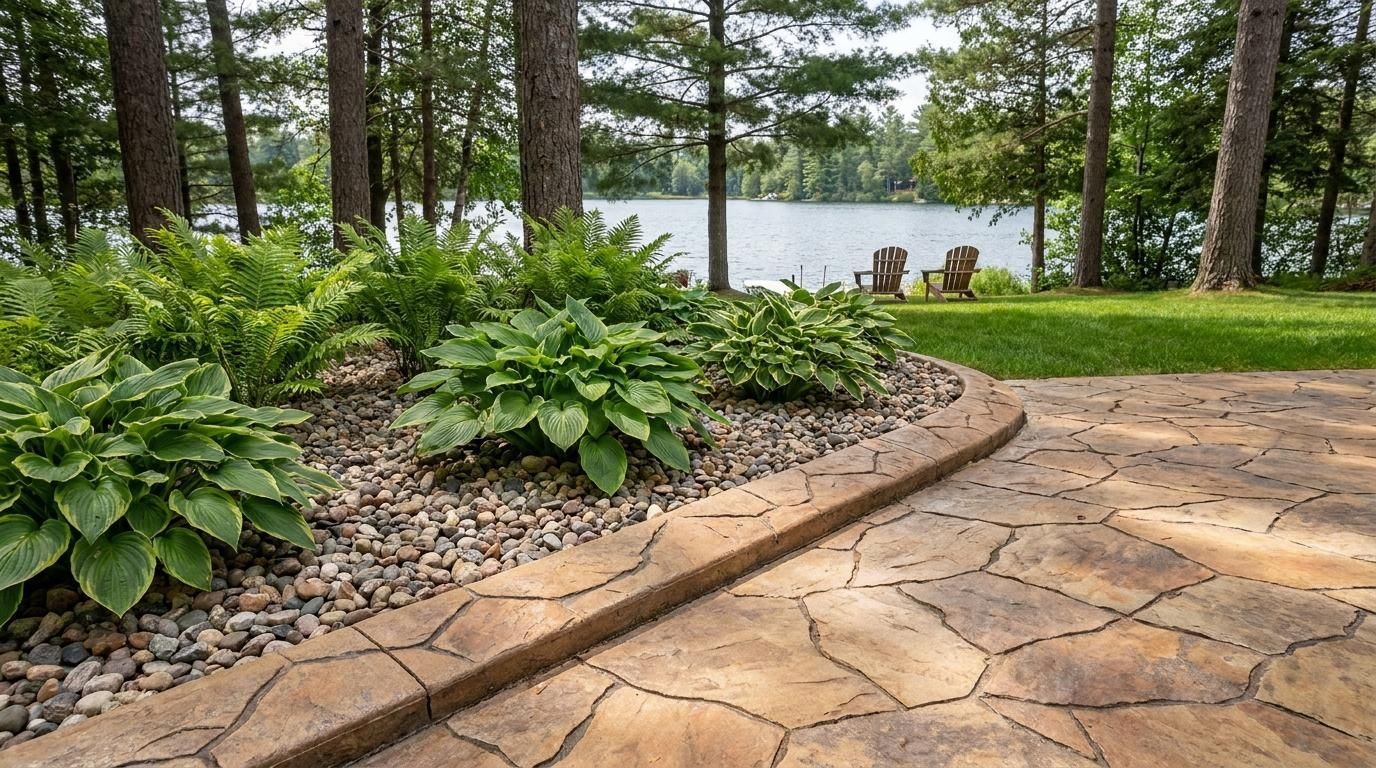
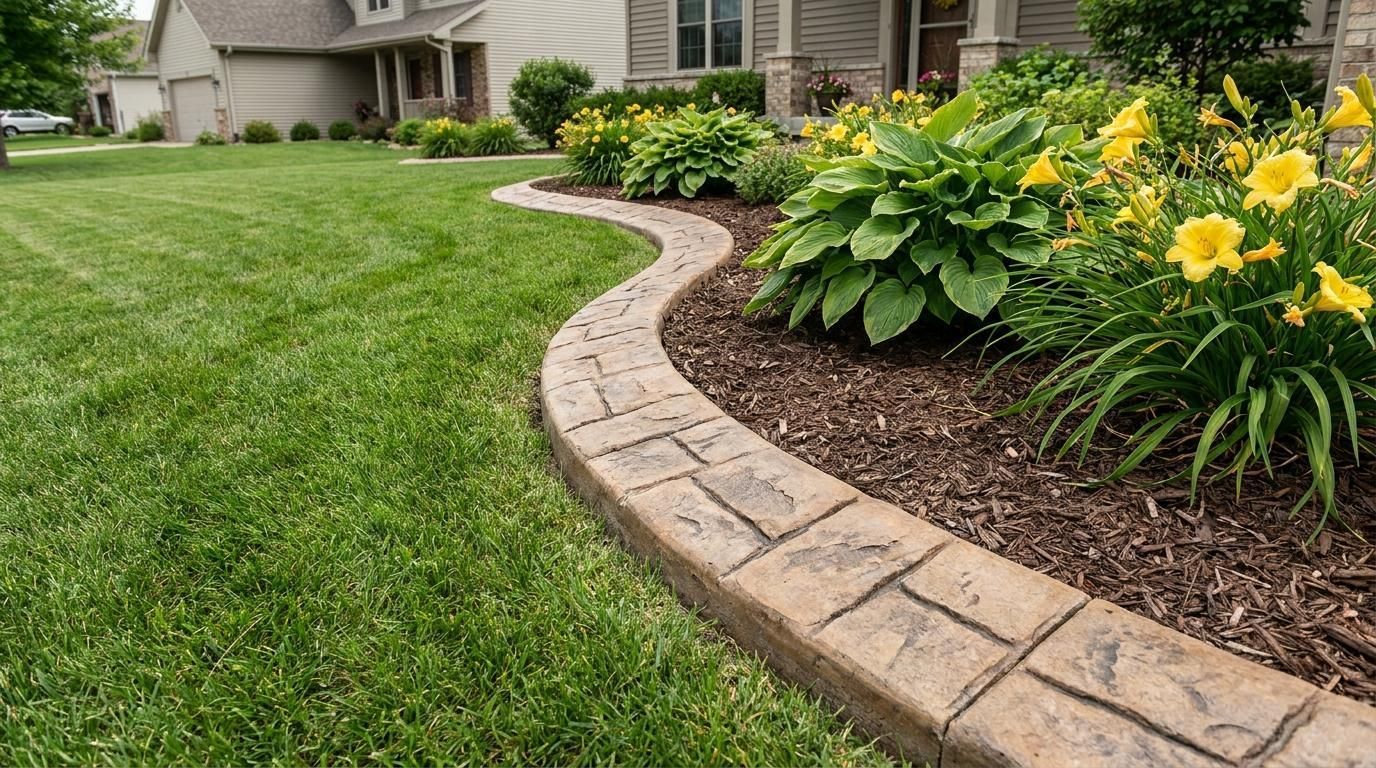
1. Flagstone: Natural Stone That Blends With Any Garden
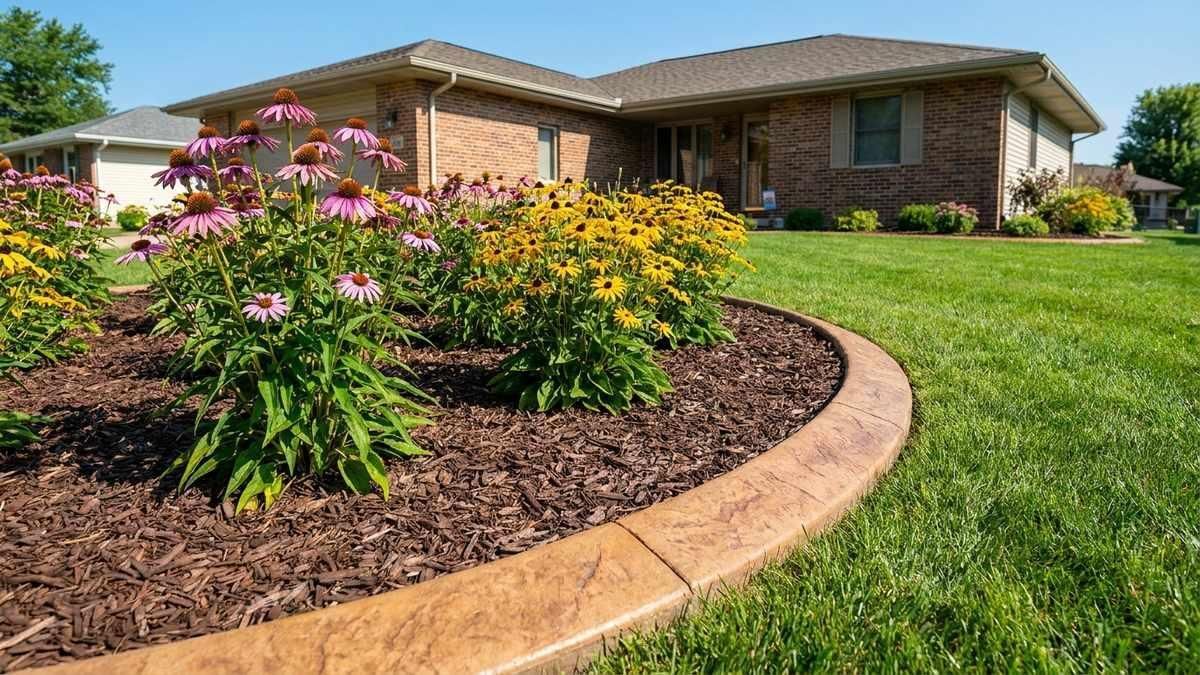
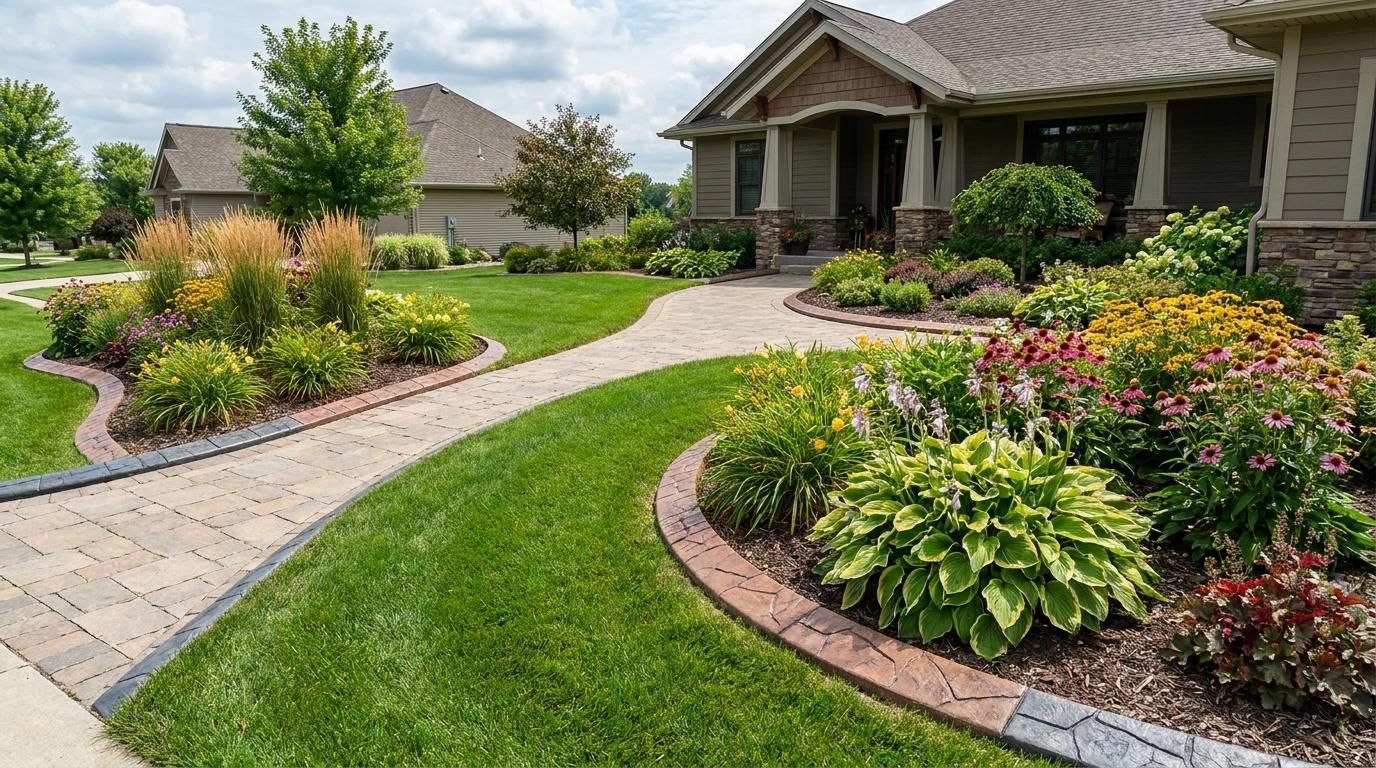
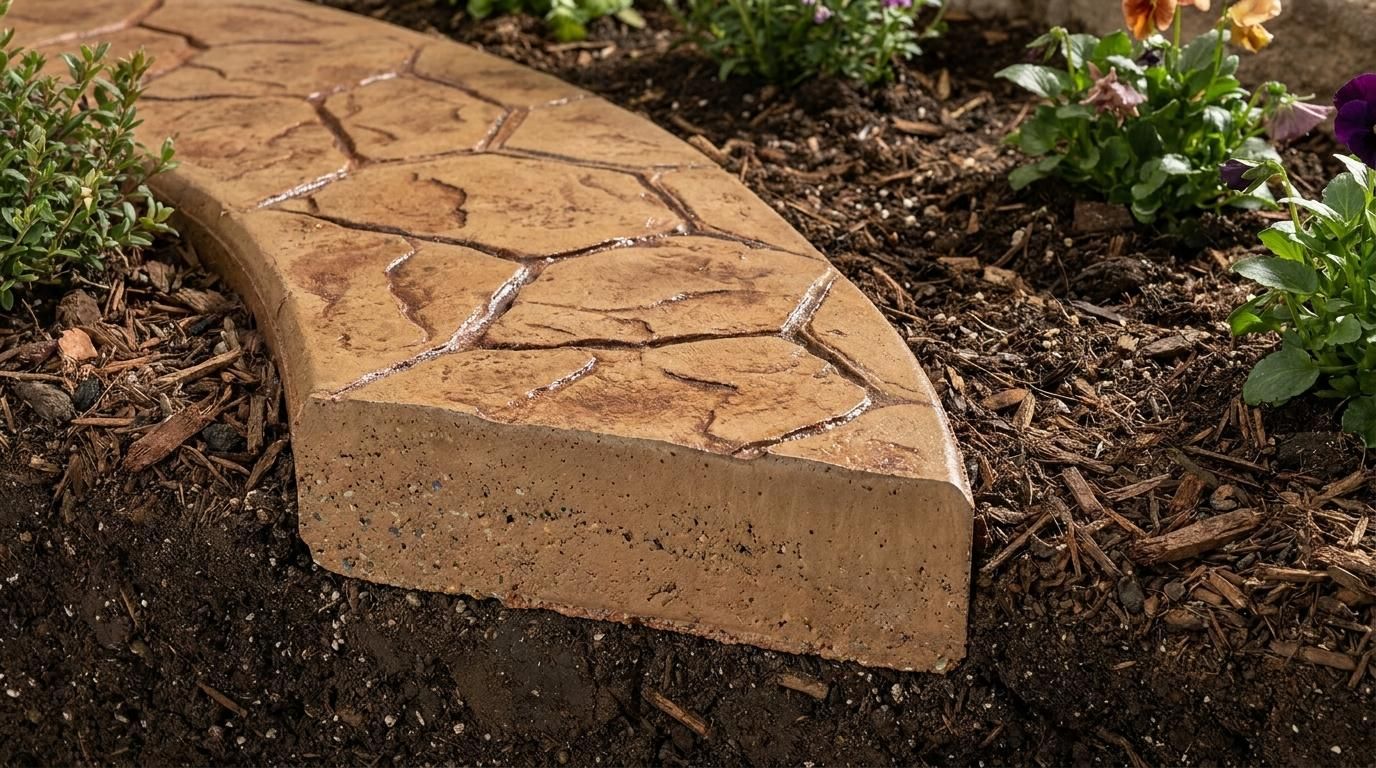
Flagstone-stamped borders mimic natural stone slabs laid end to end, producing an edge that looks like it belongs alongside hostas, daylilies, or ornamental grasses. The irregular texture catches shadow and adds depth without competing with your plants. In Wisconsin garden beds, the flagstone pattern naturally disguises hairline surface changes from freeze-thaw movement that would show on smooth finishes.
Pair flagstone with earth-toned integral colors like Sandstone or Desert Tan for a border that settles into the landscape while still doing its job. For homeowners weighing flagstone against the full pattern catalog, our overview of concrete curbing styles in Wisconsin covers the broader range of stamp options and which patterns suit different home styles.
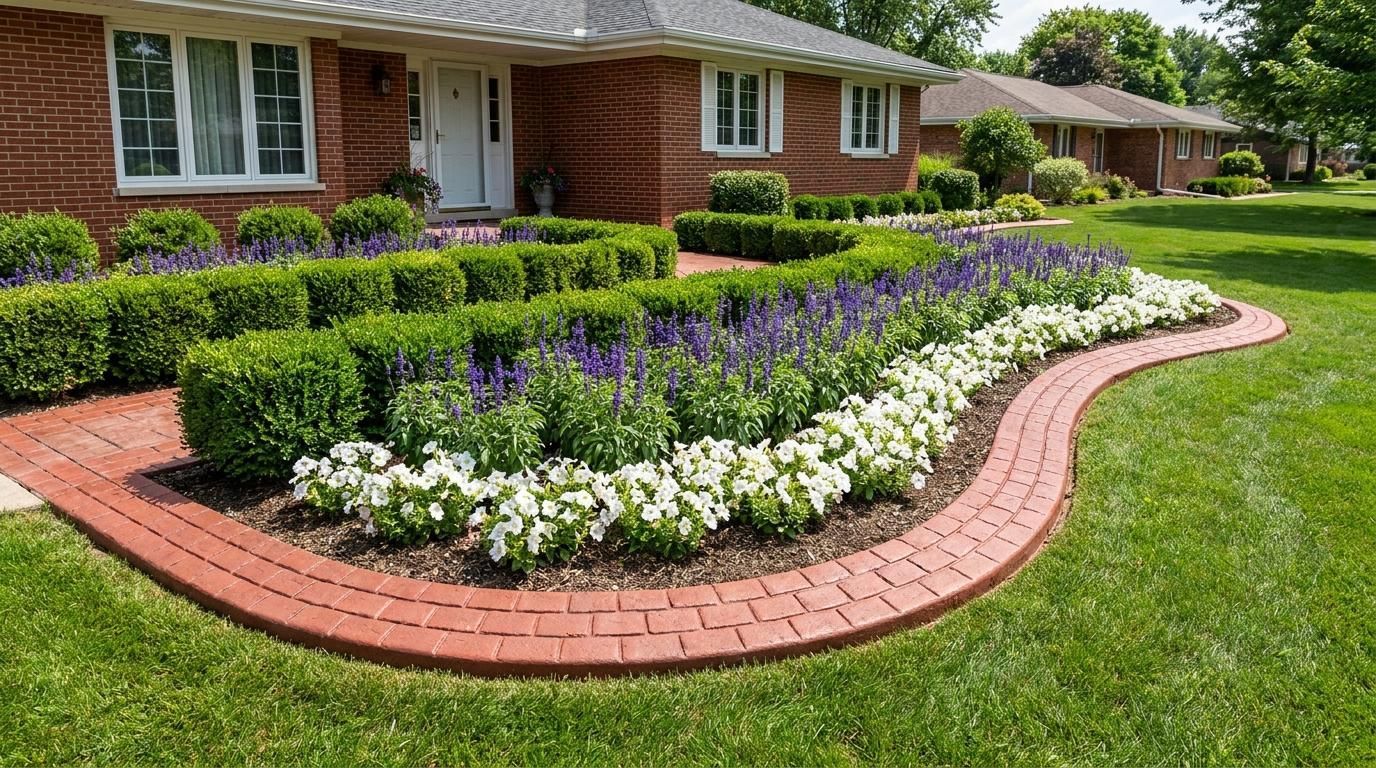
2. Cobblestone: Old-World Edges for Traditional Beds
Cobblestone-patterned curbing brings a formal, structured look to garden beds alongside brick-facade homes common in Wausau and Stevens Point neighborhoods. The repeating rectangular stones create a clean visual rhythm that frames symmetrical plantings and defined lawn-to-bed transitions. Unlike loose cobblestone pavers that shift and separate over time, continuous extruded cobblestone curbing stays locked in place with no gaps for weed penetration. Brick Red or Colony Red integral colors match Wisconsin red-brick exteriors, while Slate offers a cooler contrast against white or gray siding.
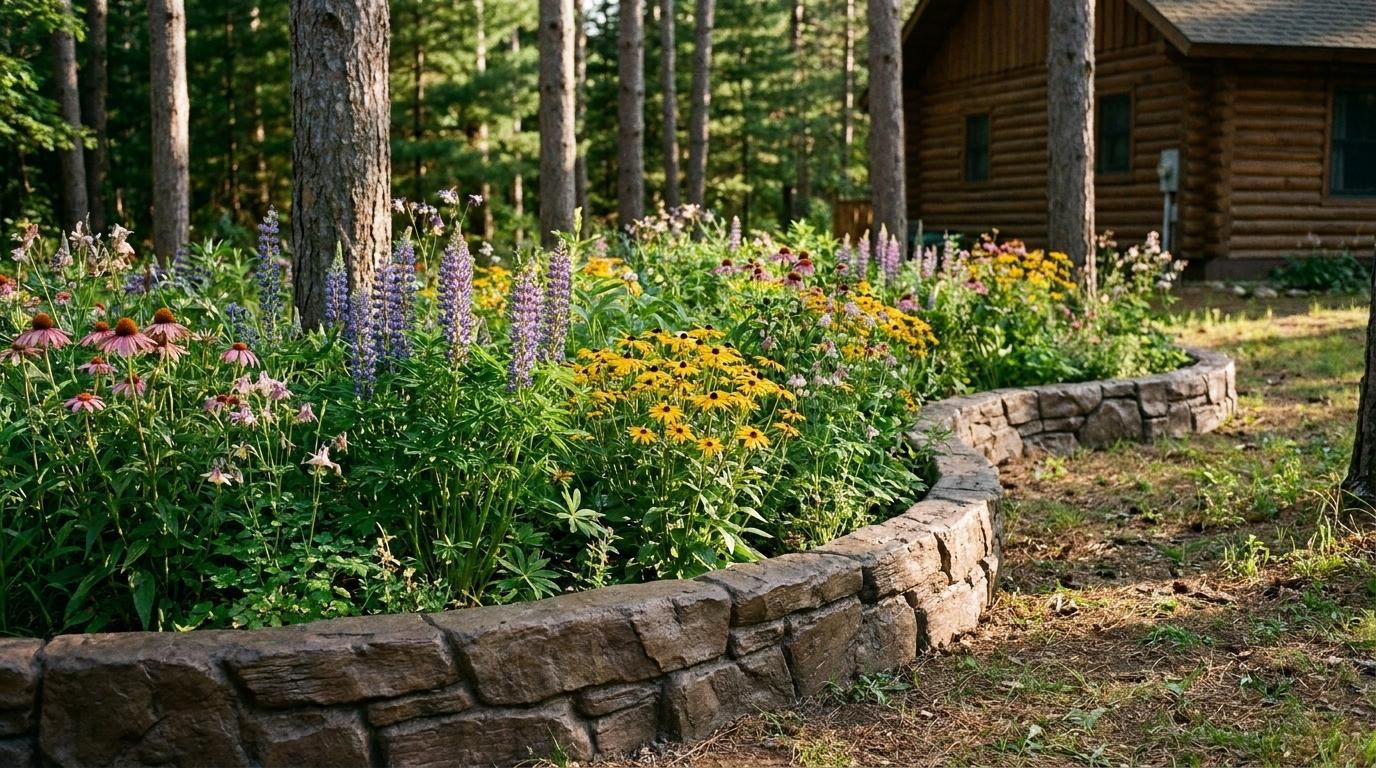
3. Random Rock: Organic Texture for Informal Gardens
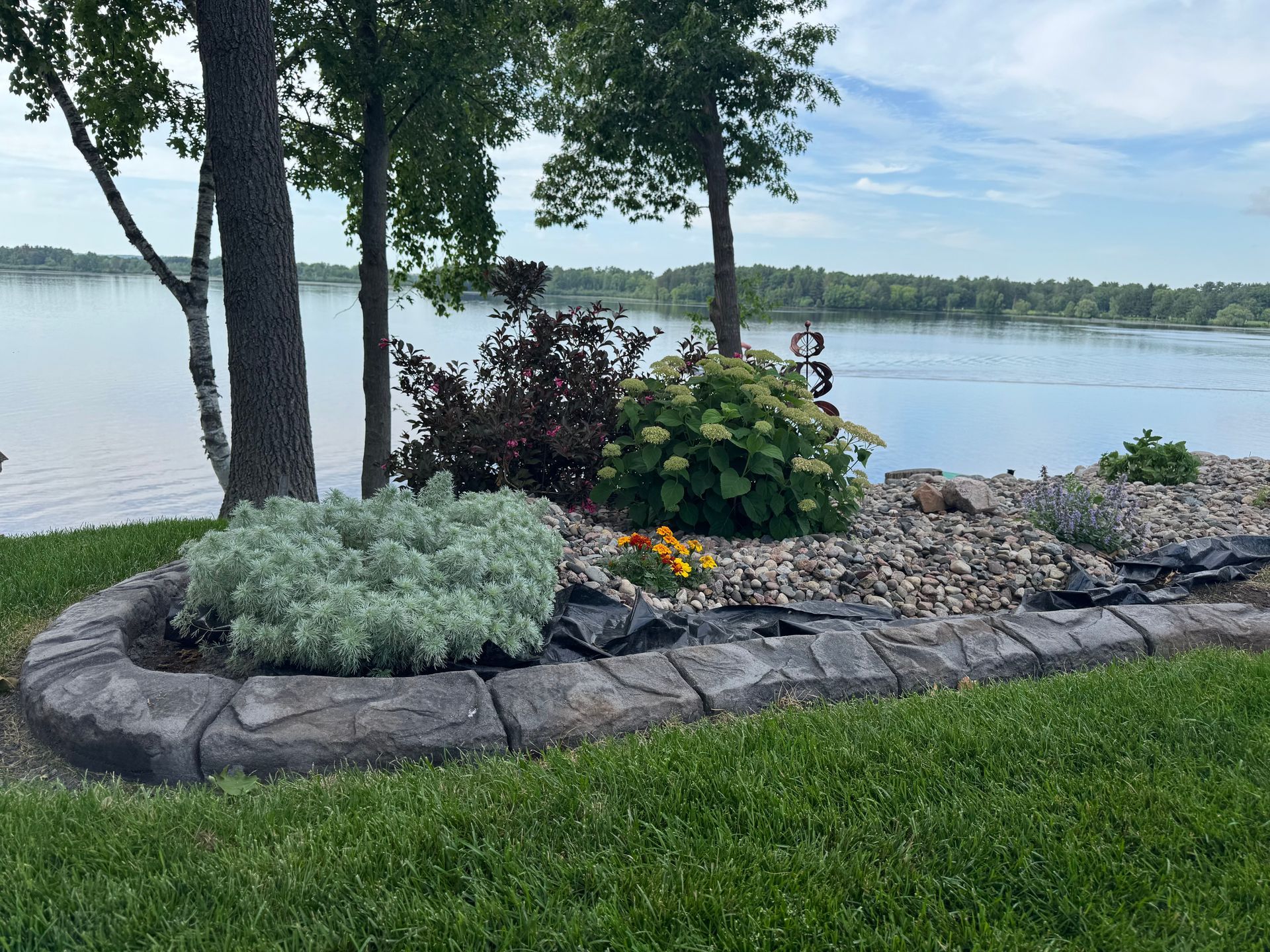
Random Rock borders suit free-form garden beds where the landscape flows without hard geometric lines. The irregular stone pattern avoids a manufactured look, reading as hand-placed fieldstone from just a few feet away. For cottage-style gardens in Merrill or Northwoods cabin properties, Random Rock in Bark or Driftwood complements native Wisconsin plantings like wild bergamot and black-eyed Susans. This pattern also hides normal concrete weathering better than any geometric option.
4. Wood Grain: Warmth Without the Rot
Wood Grain curbing delivers the appearance of natural timber edging without the decay, insect damage, and replacement cycle that real wood faces in Wisconsin's wet seasons. The realistic grain texture pairs naturally with raised vegetable beds, herb gardens, and rustic landscape designs. Landscape timbers typically split and heave within 5–8 years in freeze-thaw conditions, while Wood Grain concrete curbing lasts 15–20 years with periodic resealing. Cedar or Leather integral colors create the most convincing wood appearance, especially with a light Antique Cork release accent for added dimension. The rounded profile options enhance the timber illusion along garden perimeters.
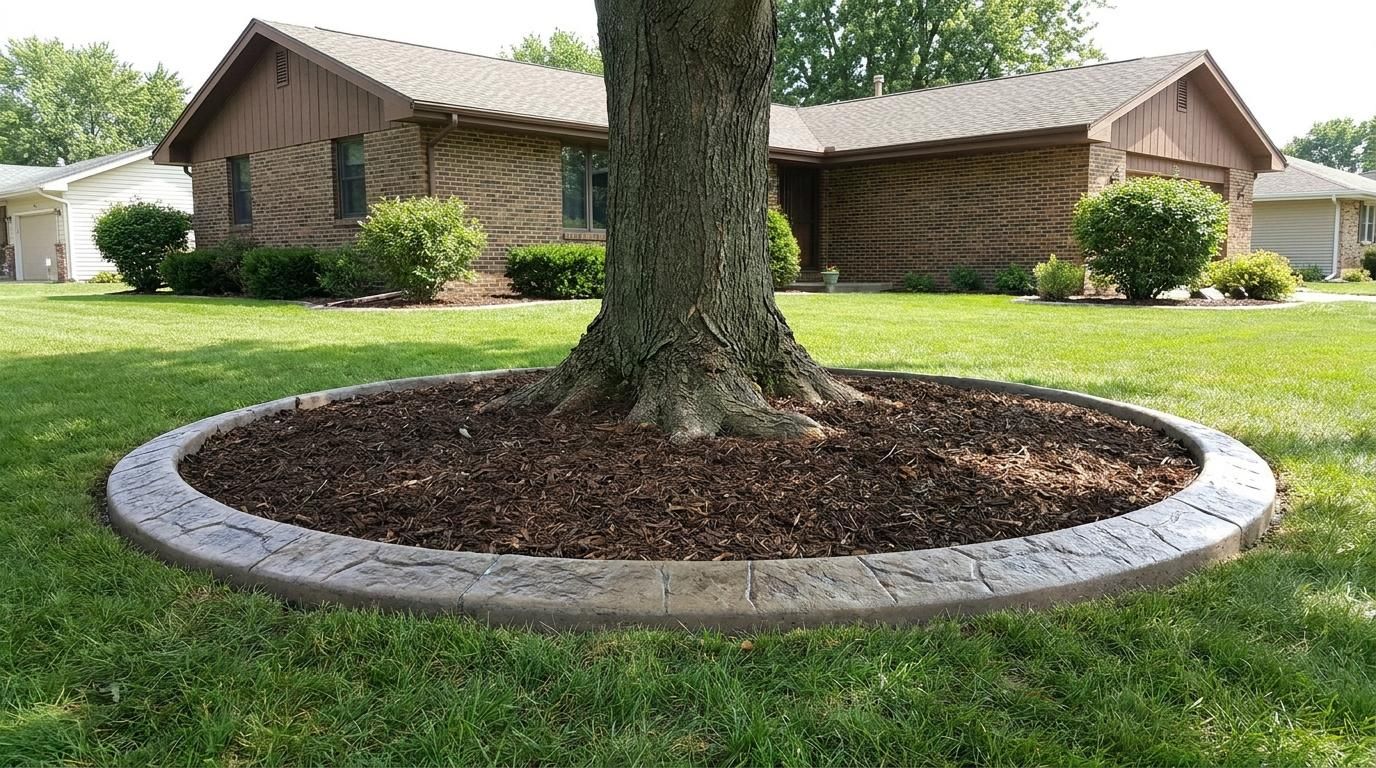
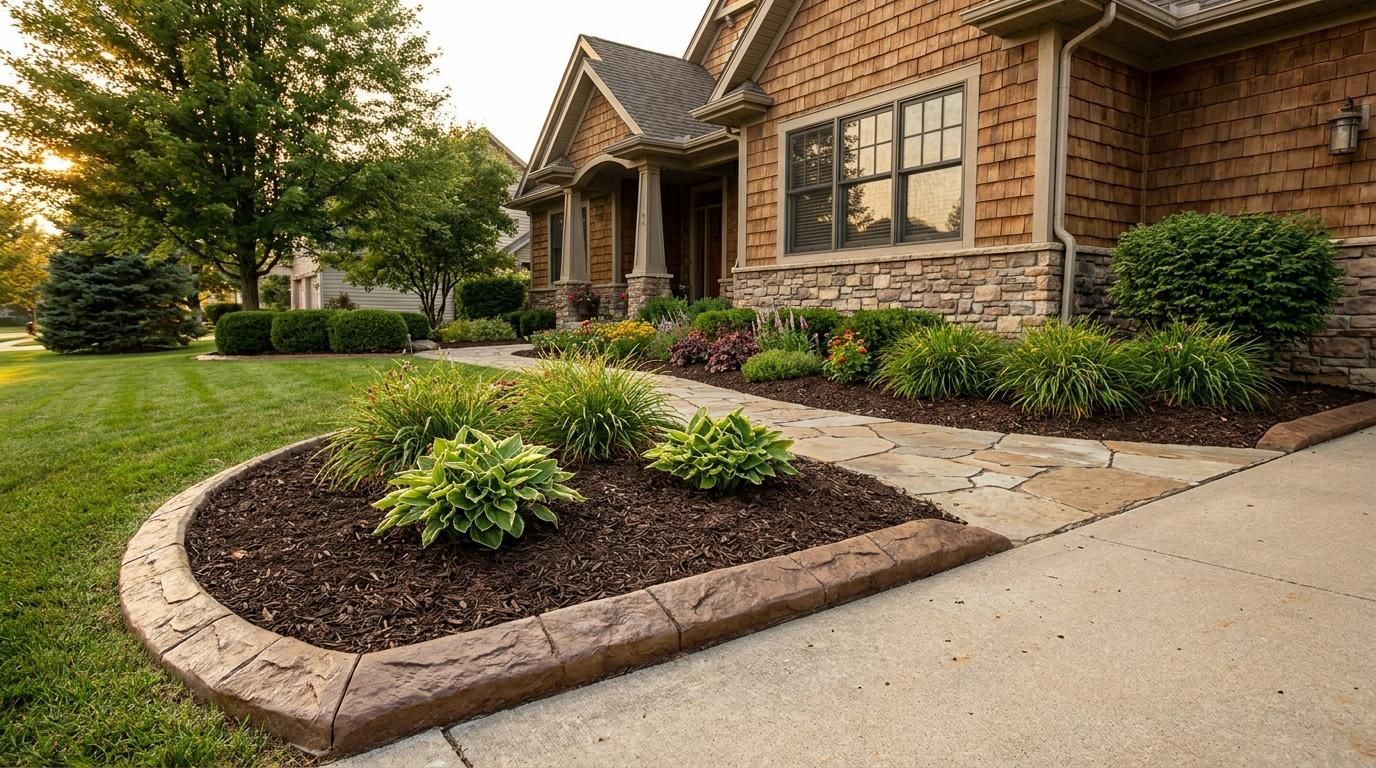
5. Castle Rock: Rustic Borders for Foundation Beds
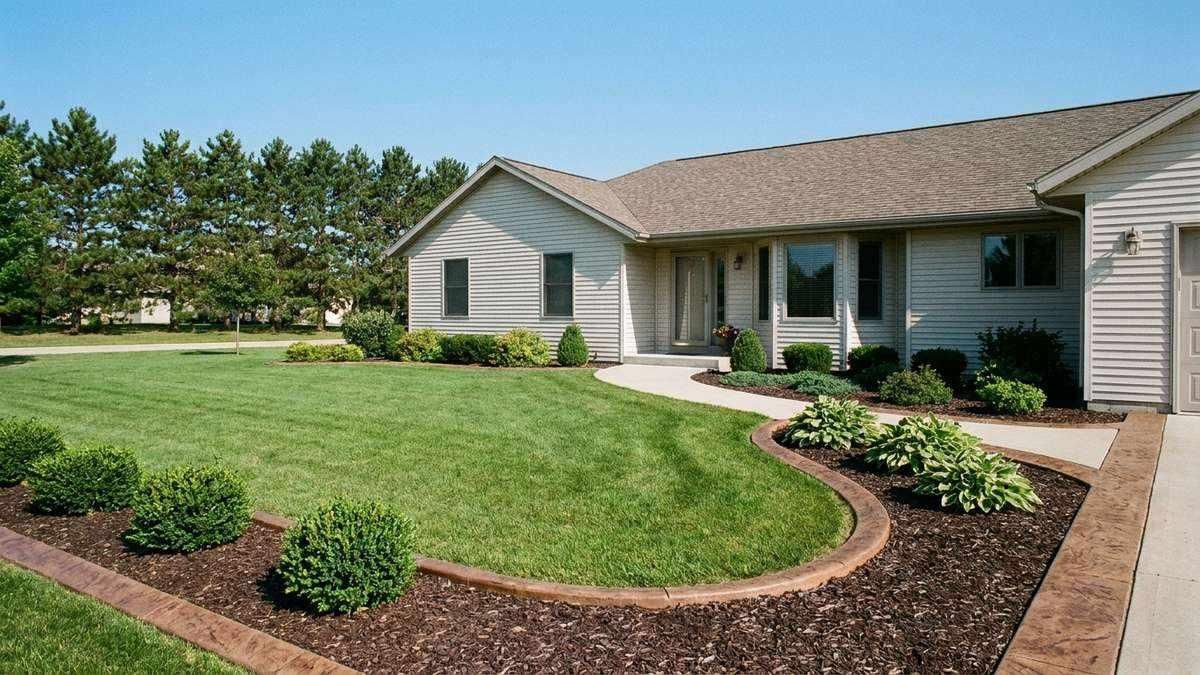
Castle Rock stamping creates a rough-cut stone appearance suited to foundation plantings, front walkway borders, and garden beds visible from the street. The texture carries enough detail to read from a distance, which makes it a practical choice for curb appeal projects. For homes in the central Wisconsin corridor where front-yard beds anchor the entire landscape design, Castle Rock in Rawhide or Earthen gives a substantial, handcrafted look. Pair it with professional rock or mulch installation inside the bed for a finished project in a single visit.
Frequently Asked Questions
How deep should a concrete garden border be?
Most concrete garden borders are installed 3–4 inches deep, enough to block grass runner roots and contain 2–3 inches of mulch or rock. Elite Landscape Curbing sets each border into a prepared trench with the top edge at mower-wheel height, so you get a clean mowing line with no trimming required.
Do concrete garden borders prevent weeds?
Continuous concrete curbing eliminates the gaps and joints where weeds push through in segmented edging systems. Grass rhizomes and weed roots hit a solid barrier instead of squeezing between loose pavers or under lifted plastic strips. Mulch or rock inside the bed handles seeds that land on the surface.
Can concrete borders follow curved garden bed shapes?
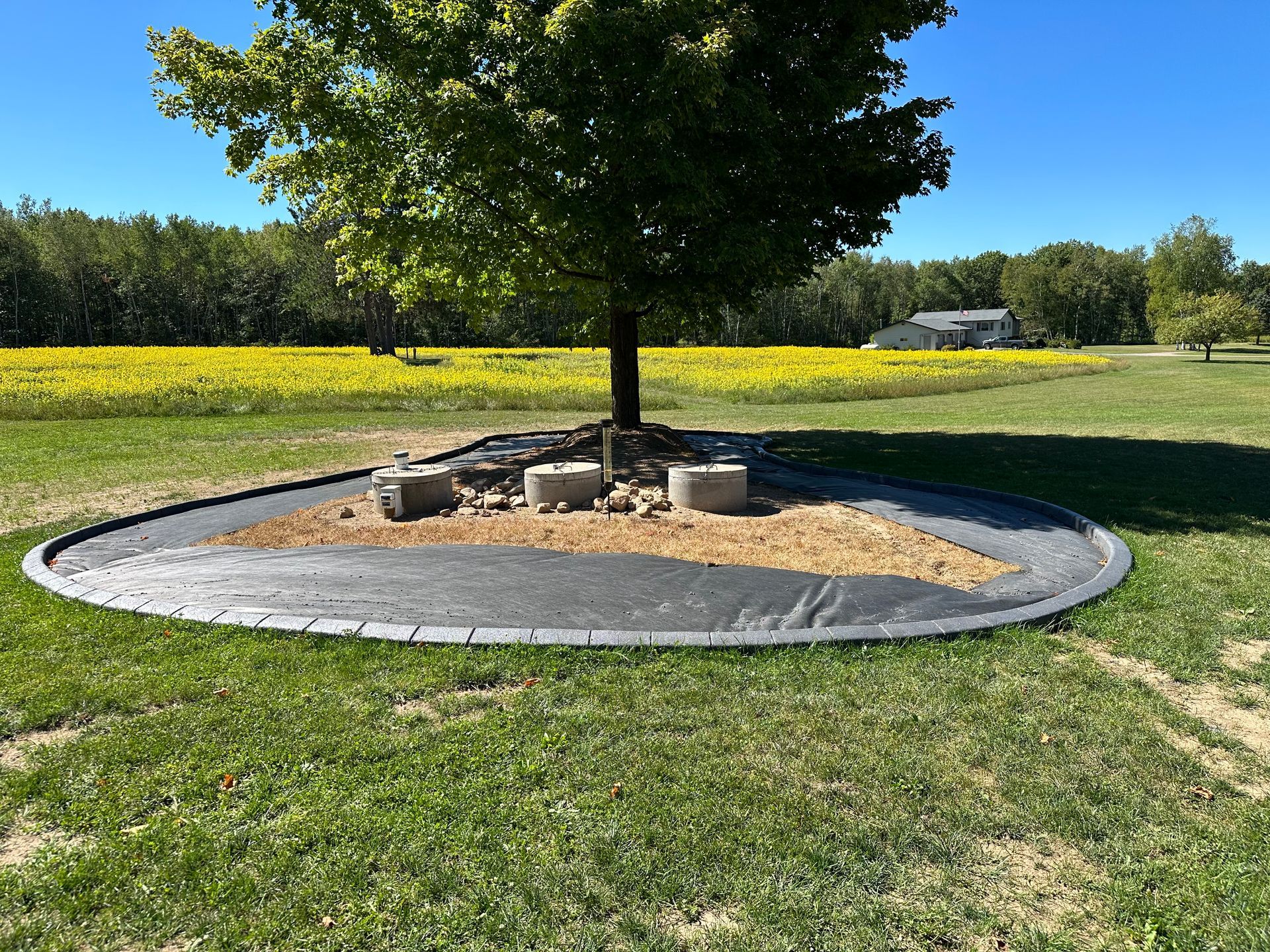
The Harpten extrusion machine bends smoothly around curves, kidney-shaped beds, and irregular layouts without joints or seams. Tight inside corners and S-curves are standard work for a professional crew. The finished border is one continuous piece regardless of the bed's shape.
Give Your Garden Beds a Border That Lasts
The right concrete border style turns a garden bed from a maintenance task into a finished landscape feature. Whether it's flagstone for natural settings, cobblestone for formal beds, or wood grain for rustic warmth, each pattern handles Wisconsin's climate while framing your plantings.
Contact Elite Landscape Curbing at (715) 204-4727 or request a free quote to choose a style for your garden beds. You'll receive your detailed estimate within 12 hours of our initial meeting.